Which service or treatment the patient searched for
Which campaign, keyword, or creative generated the inquiry
Whether the inquiry was qualified for your services
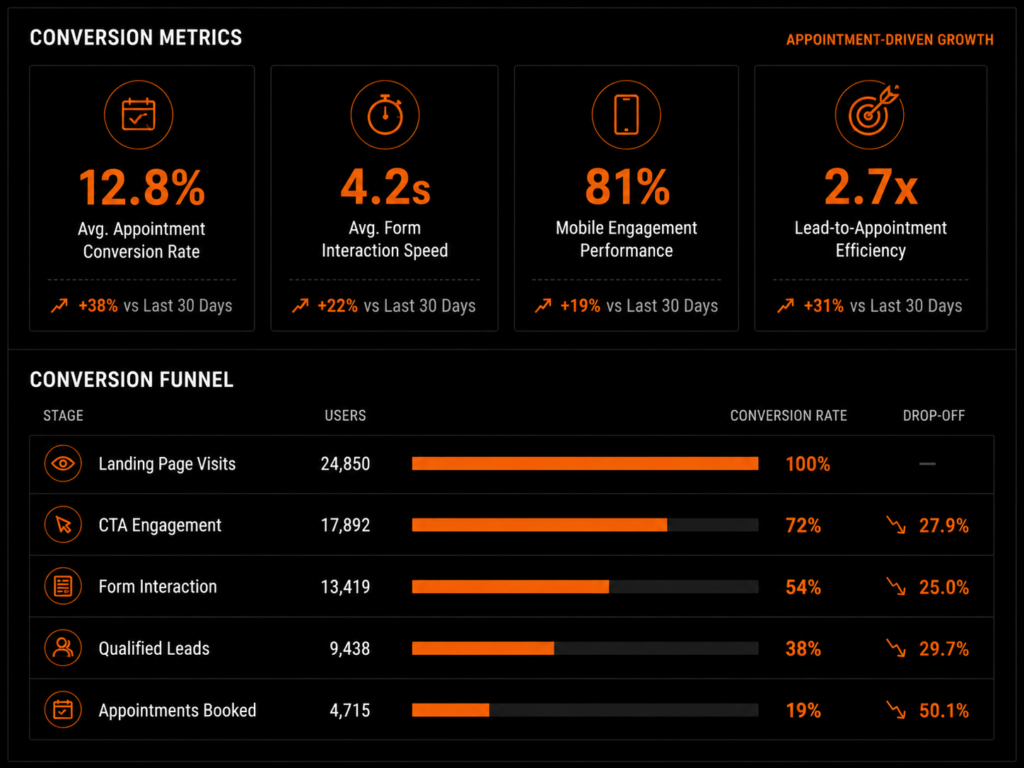
Whether the patient actually booked an appointment
How much it cost to acquire that patient — end to end
Which channels are worth scaling next quarter
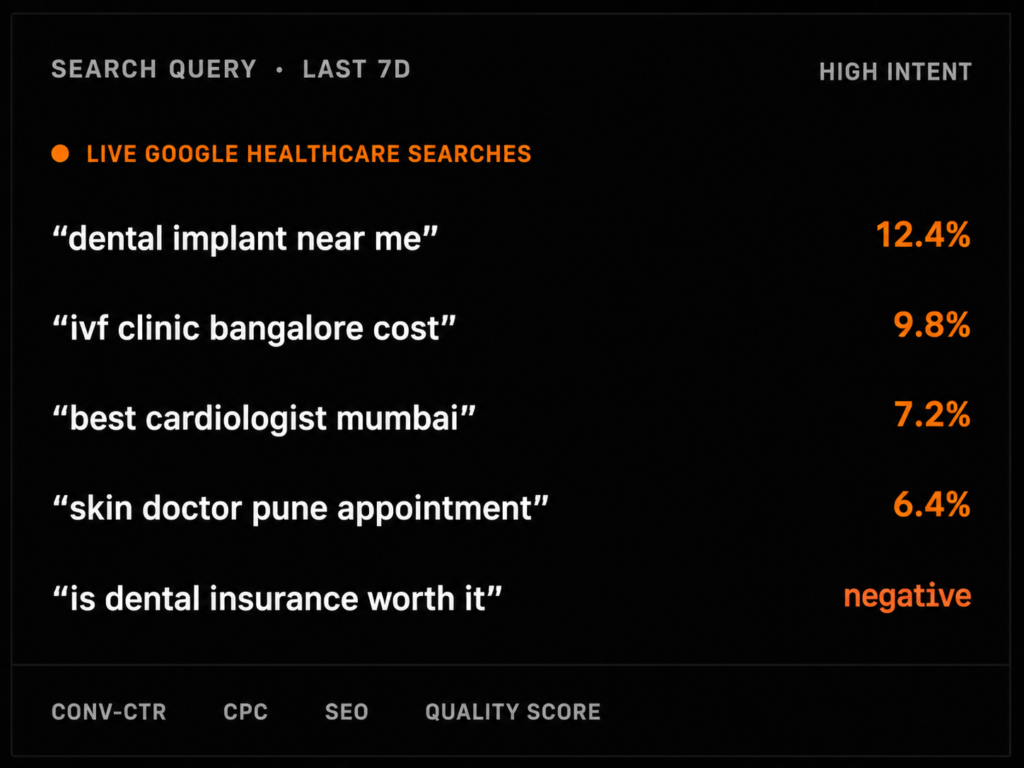
Treatment-specific search campaigns built around patient intent
Location targeting tuned for clinics & multi-site hospitals
Ongoing negative-keyword cleanup to cut wasted spend
Call & form conversion tracking, optimized to appointment intent
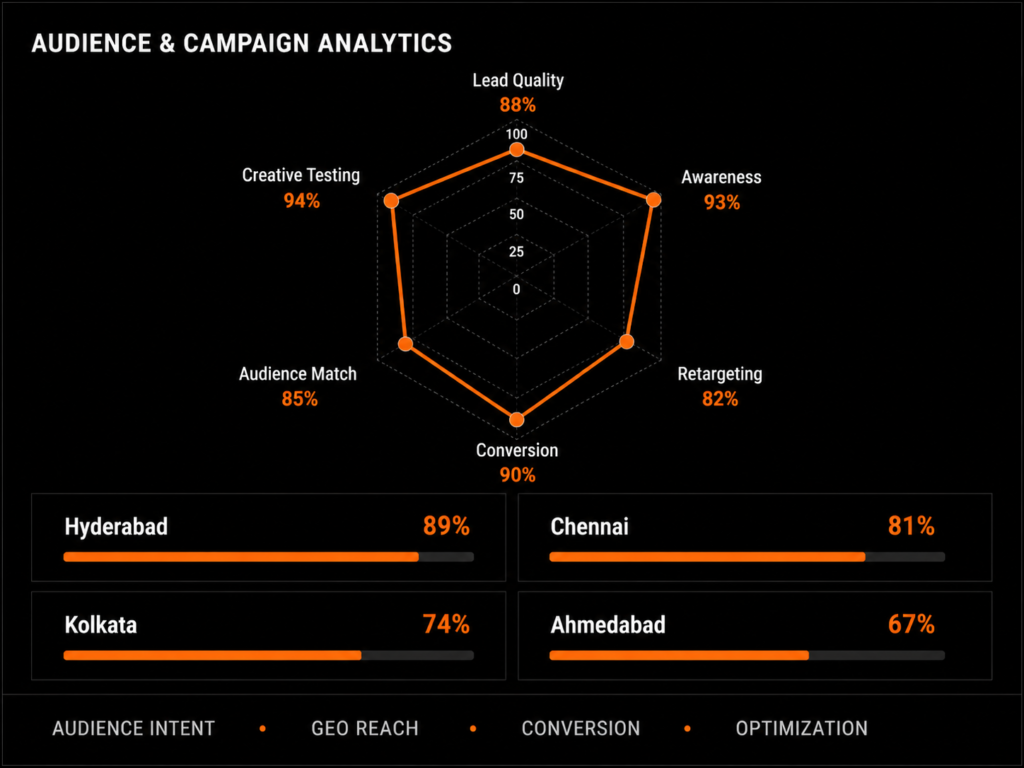
Local awareness, lead-gen & retargeting campaigns
Audience segmentation by location, interest & service line
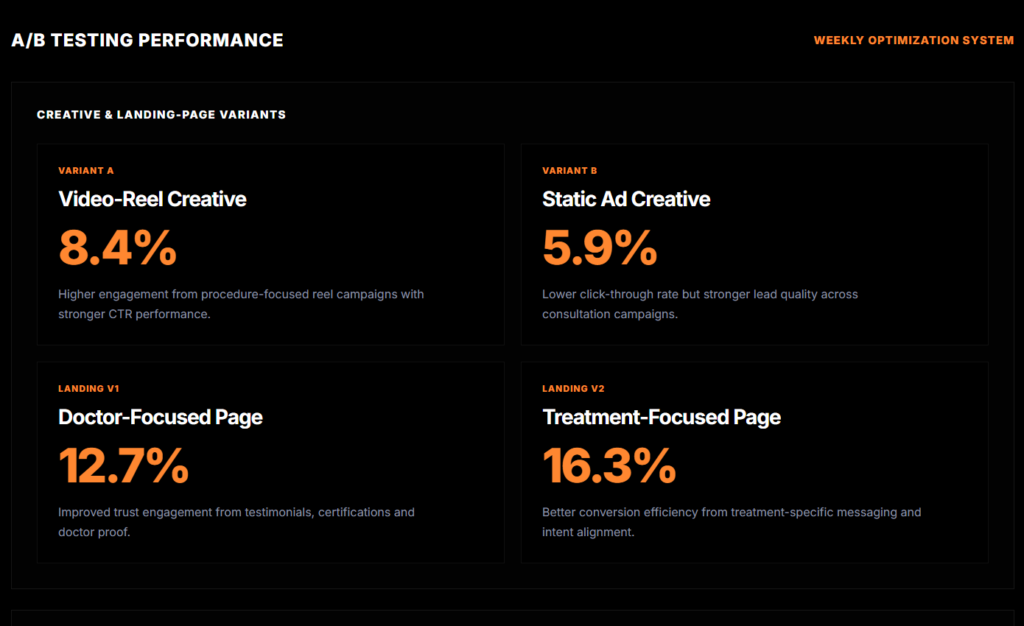
Creative & messaging testing across reels, statics & carousels
Lead-quality review & CRM-side qualification
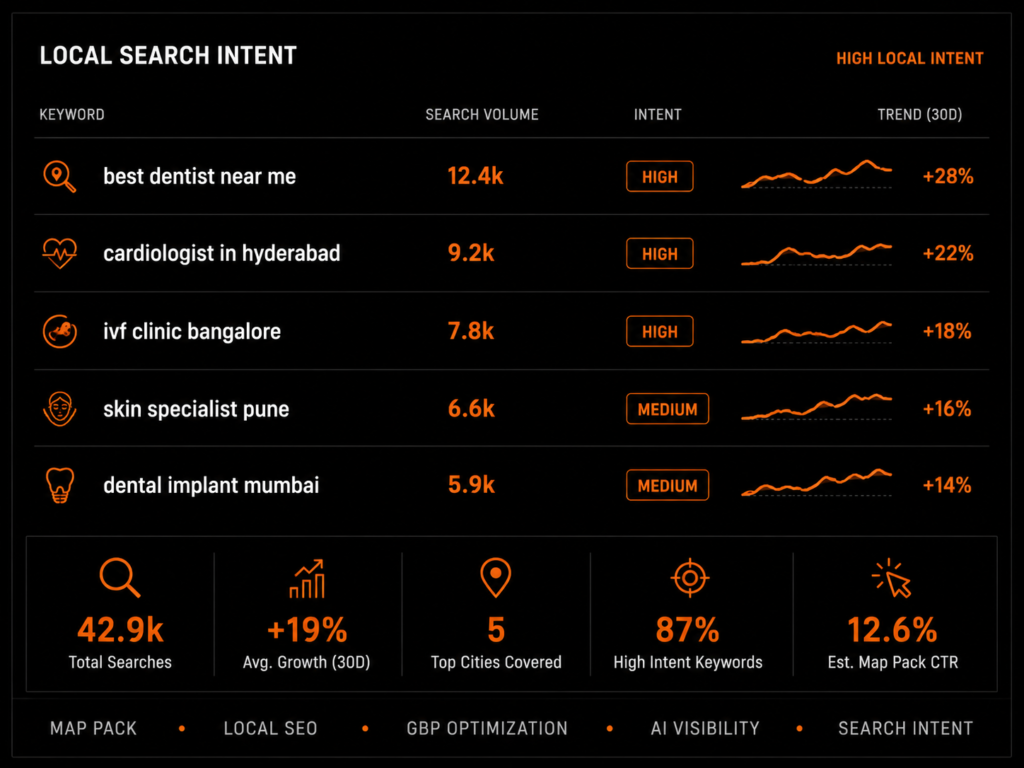
"Near me", city & treatment-name keyword planning
Google Business Profile optimization recommendations
Review & reputation signals to lift map-pack click-through
Internal links & AI-visibility content for long-tail discovery
Treatment-specific page structure, mobile-first by default
Trust signals, testimonials, before-and-after, doctor proof
FAQ blocks for common patient objections & intent signals
Call & form tracking, with conversion events wired to ads
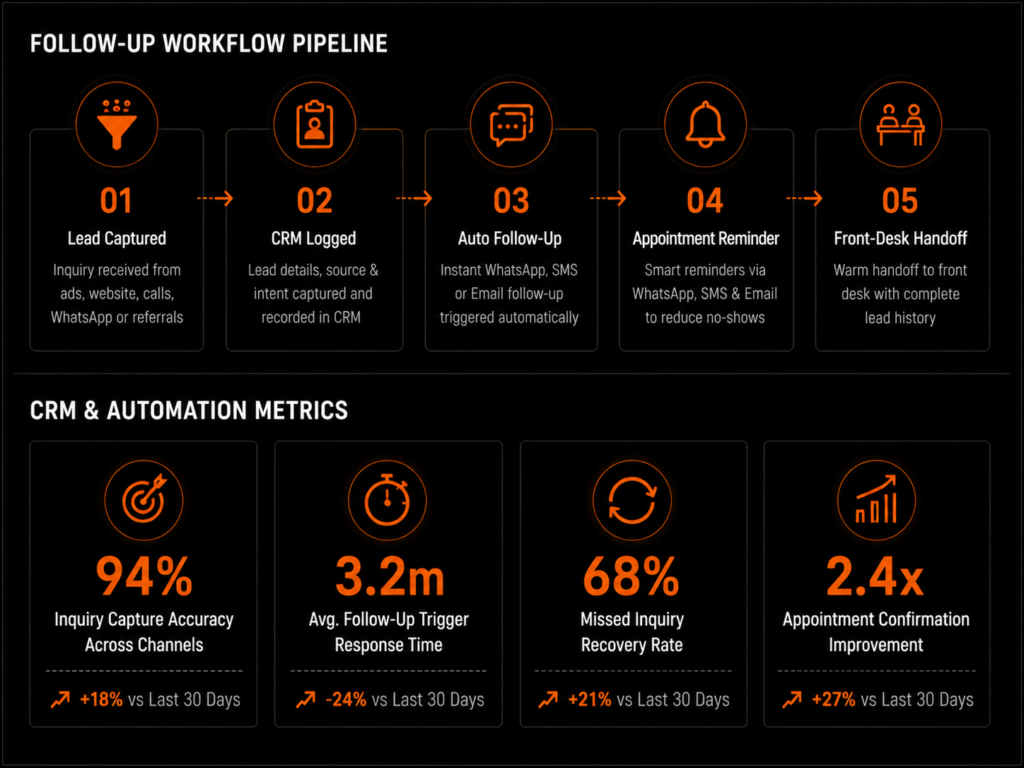
Inquiry capture & source tracking — every lead, every channel
WhatsApp, SMS & email follow-up workflows
Missed-inquiry recovery & appointment reminders
Front-desk handoff workflows that don't drop the ball
A/B testing of creatives, copy & landing-page variants
Search-term review & budget reallocation, weekly
Lead-quality review against booked appointments
Patient acquisition cost analysis, by procedure & location
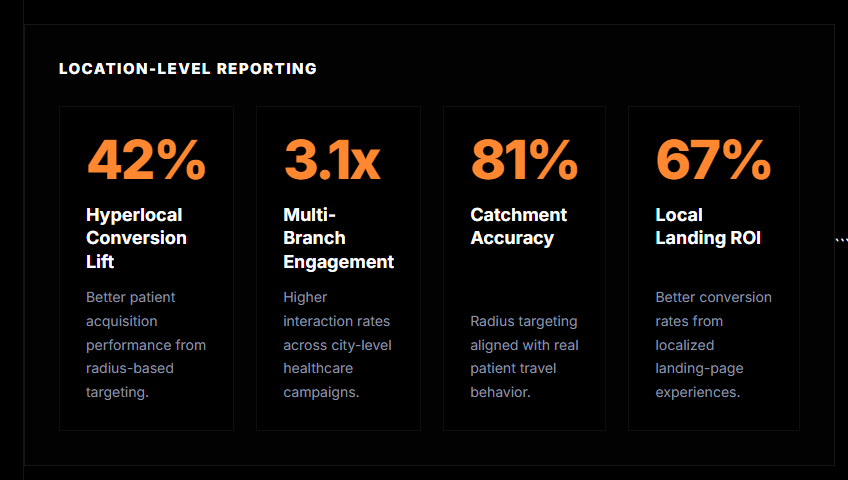
Hyperlocal targeting for clinics, hospitals & multi-site practices
Radius targeting tuned to genuine catchment, not zip-code defaults
Location-level reporting, by city, branch & service line
Local landing-page recommendations for higher conversion
Campaigns optimized for clicks instead of appointments
No separation between qualified and unqualified leads
Forms that create friction for the patient
No CRM tracking after the inquiry is captured
Reporting that shows CPL, never patient acquisition cost
Generic ad copy that doesn't match treatment intent
Landing pages that don't build enough trust to book
Missed calls and slow front-desk follow-up
No clarity on which campaigns create booked appointments
Weak local reputation signals that quietly cap conversion
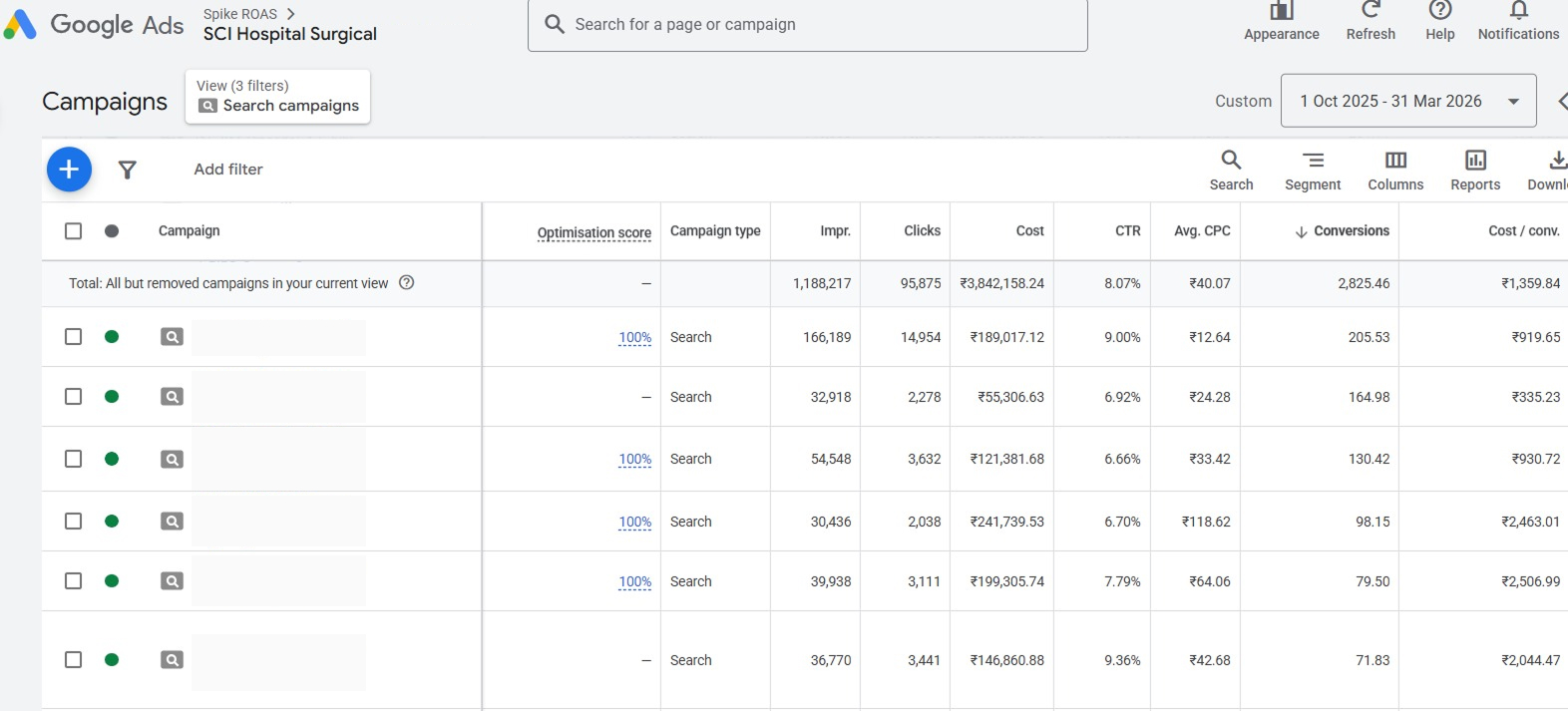
Increased revenue from ₹6L → ₹3Cr with ₹30L ad spend
Reduced CPL from ₹180 → ₹100 with Same Ad Budget

“We were genuinely surprised by what the audit revealed. There were multiple inefficiencies we had overlooked for years, which were directly impacting our performance. Within two months, the numbers changed drastically, and the difference was hard to ignore.”
Smriti Rana
Marketing Head - SCI Hospital
“After improving our website and landing pages, we saw a steady increase in patient inquiries and bookings.”
“Our online experience became clearer, which helped patients take action faster.”
“Our campaigns started bringing consistent, high-quality leads instead of random inquiries.”
“We started receiving direct inquiries through content and engagement.”


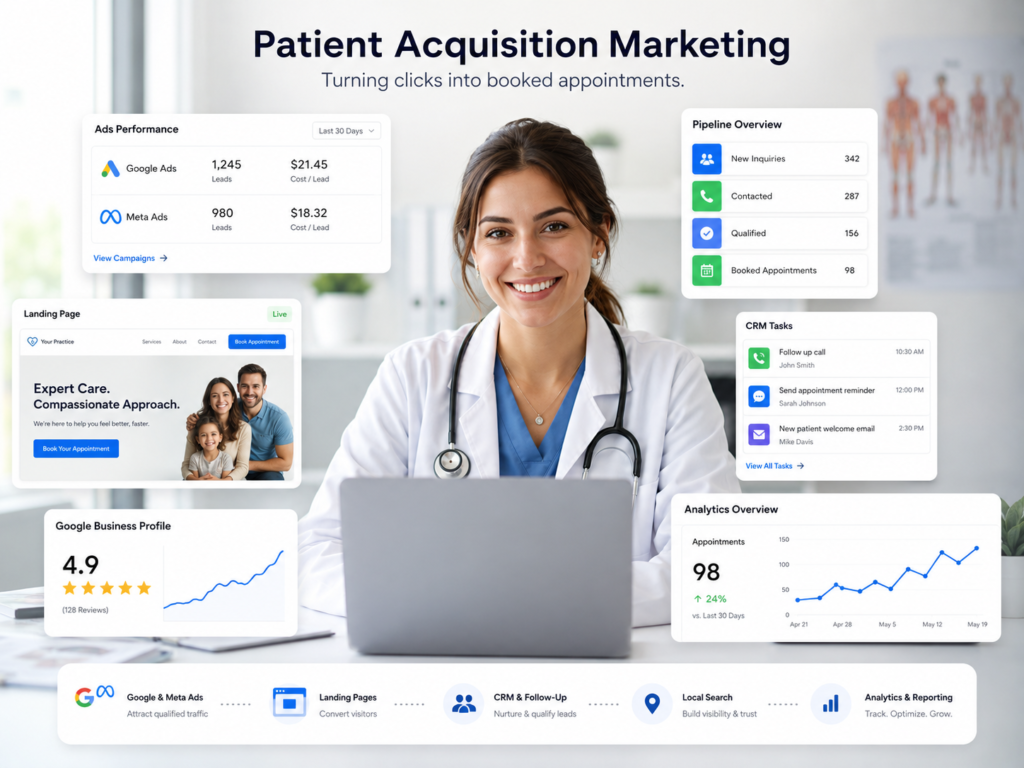
Patient acquisition marketing is the process of attracting new patients and converting them into booked appointments through channels like Google Ads, Meta Ads, local SEO, landing pages, CRM follow-up, reviews, and analytics. It focuses on qualified inquiries and appointment outcomes — not just clicks or impressions.
Healthcare marketing can include awareness, education, branding, and reputation building. Patient acquisition is more performance-focused — it tracks how campaigns generate inquiries, how many inquiries become appointments, and how much it costs to acquire a patient.
Google Ads works well for high-intent treatment and location searches. Meta Ads works well for awareness, retargeting, and lead generation. Local SEO, Google Business Profile, landing pages, online reviews, CRM follow-up, and analytics improve the entire acquisition system.
Yes. Dedicated landing pages usually convert better than generic website pages because they match the patient intent, explain the treatment clearly, build trust, and make it easy to call or request an appointment.
CPL can be reduced by improving keyword targeting, adding negative keywords, testing ad copy, refining audiences, improving landing pages, tracking calls and forms correctly, and optimizing based on lead quality instead of traffic volume.
Lead quality improves when campaigns target the right treatment intent, location, audience, and patient need. SpikeROAS also improves landing page messaging, qualification signals, CRM tracking, follow-up workflows, and reporting so weak leads can be identified and reduced.
Patient acquisition cost (PAC) is the total marketing and sales cost required to acquire one new patient. It is more useful than CPL because it connects spend to actual patient growth, not just form submissions or calls.
Paid campaigns can generate inquiries soon after launch, but reliable optimization usually needs several weeks of clean data. Landing page improvements, CRM follow-up, local SEO, and reputation building compound over time.
Yes. SpikeROAS supports CRM automation, follow-up workflows, patient conversion optimization, analytics, and patient journey tracking. This helps reduce missed opportunities after a patient calls, submits a form, or sends a WhatsApp inquiry.
No. Patient acquisition can work for clinics, hospitals, multi-location practices, individual doctors, diagnostic centers, dental clinics, dermatology clinics, fertility clinics, physiotherapy centers, wellness brands, and other healthcare businesses.
©2026, SpikeROAS. All Rights Reserved