
Audit crawlability and demand
Check indexing, duplicate catalog URLs, canonical tags, internal links, and existing Search Console data. Map product, application, supplier, and market queries to pages with a clear role.
Improve search visibility for your products and applications. Build useful pages for technical buyers and measure organic enquiries and AI citations.
Schedule a CallA crawl and content audit, intent-to-page map, prioritized fixes, content briefs, and a reporting baseline for organic search and AI visibility.
Check indexing, duplicate catalog URLs, canonical tags, internal links, and existing Search Console data. Map product, application, supplier, and market queries to pages with a clear role.
Add verified details, useful headings, related product links, approved documents, and relevant enquiry actions. Identify catalog pages to consolidate or redirect and prioritize changes with existing demand.
Track priority pages and queries in Search Console and report organic enquiries where tracking supports it. For AI search, repeat a defined set of buyer questions and record mentions and citations separately from referral traffic.
An audit delivers a crawl review, an intent-to-page map, and a prioritized list of fixes. The implementation scope specifies which technical fixes and page updates SpikeROAS will make and which need your developers.
Ongoing reporting compares search clicks and enquiries where tracked. AI visibility uses a defined set of buyer questions and records mentions and cited sources separately.
Match wholesale supplier searches to range pages with buying details. Link installation questions to fitting guides that point back to the product range.
Map approved grade and application queries to pages with specifications, packaging, and technical documents. Track search clicks, recorded bulk enquiries, and AI citations as distinct figures.
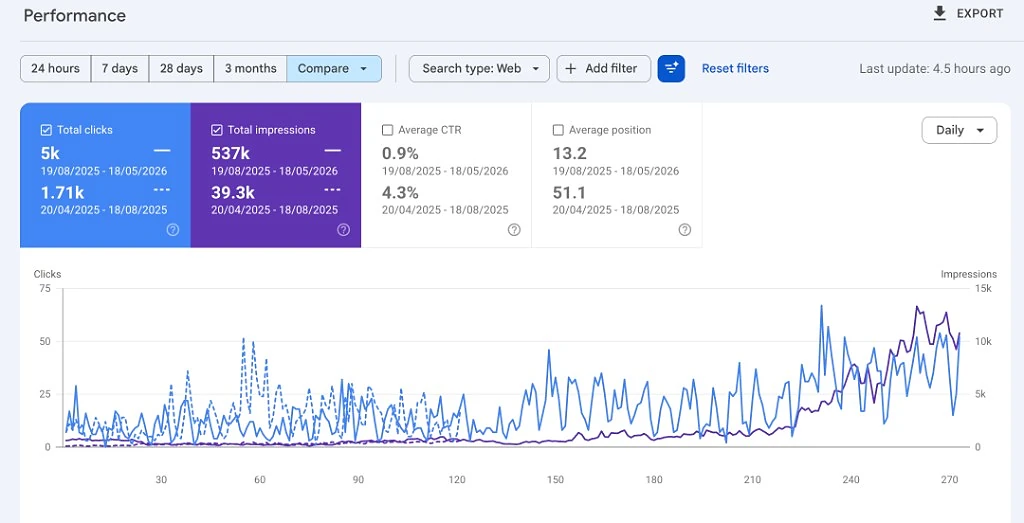
This comparison comes from a separate U.S. marketing agency engagement. It shows period-based Search Console reporting.
Yes. We can provide prioritized changes and review them after implementation. We agree who owns template fixes, page publishing, and measurement before work starts.
We review existing URLs and traffic, map relevant replacements, and verify redirects, canonicals, and internal links around launch.
We agree on the engagement scope first. An audit delivers the roadmap. Implementation can include in-scope page and linking changes, with approved template or infrastructure changes coordinated with your developers.
We repeat agreed buyer questions, record the date and tools checked, and report brand mentions and citations separately from referral visits and sales enquiries.